At Albina Altamirano's house, water arrives only twice a week and for one hour. She lives in the district of Santiago, next to the Santa Lucía estate, property of the Beta Agroindustrial Complex, one of the largest companies in Ica, the epicenter of the Peruvian agro-export boom. There she works in cleaning duties, while with her salary she tries to cover her eldest son's university tuition and the rent for a small house she shares with her family. To make ends meet, she prepares and sells cheese in her free time. But the money never stretches. Neither does the water.
"Before there was more and it was fresh. Now it comes salty. They say it's because there are more people, but also because the water goes to the estates. They use more, and there's none left for us."
Albina stores water in buckets, drop by drop, until she gathers enough to cook and bathe.
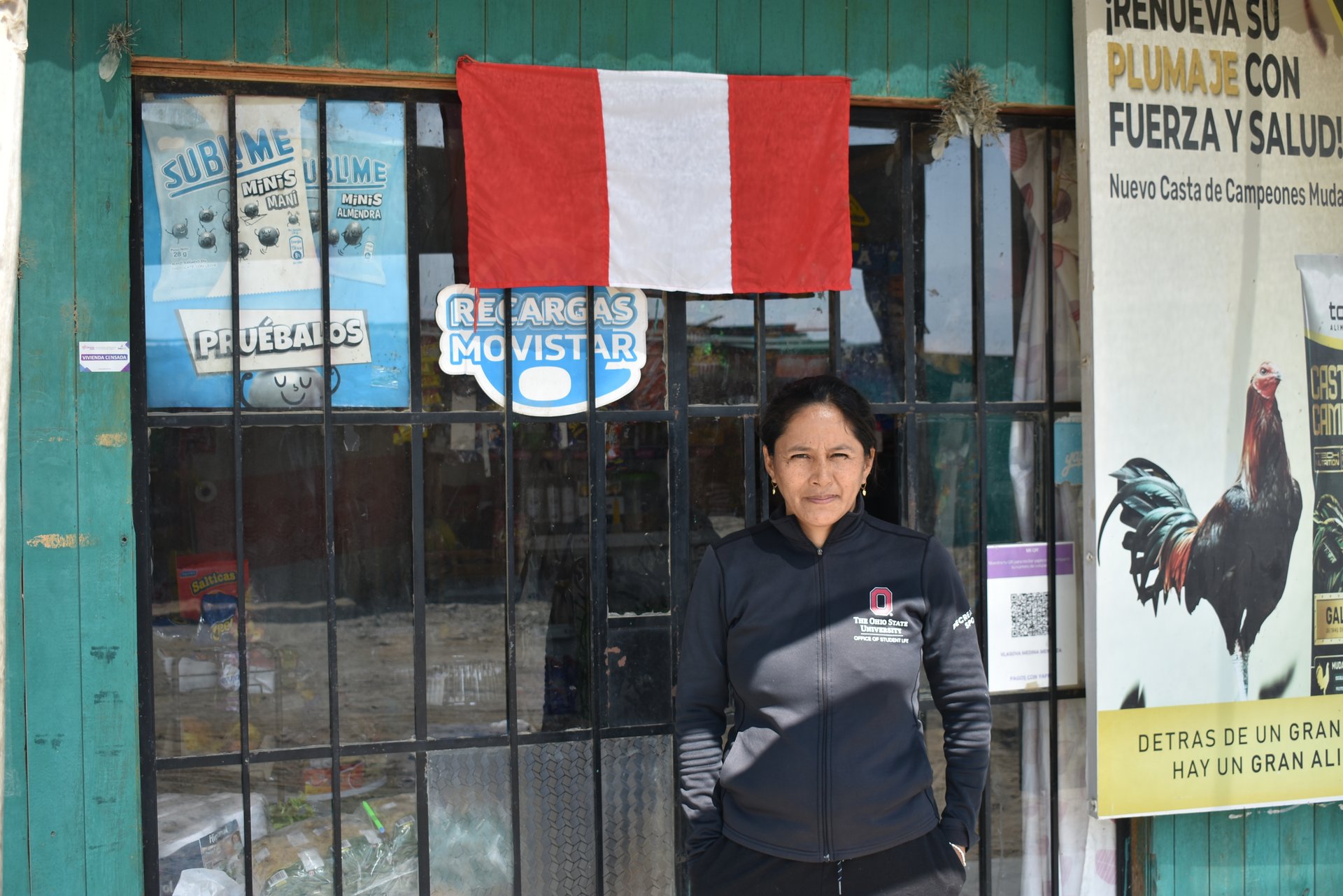
A few kilometers from that area, in the district of Salas, stretches Villa Rotary, a settlement established more than twelve years ago by families who migrated from Ayacucho, Huancavelica, Cajamarca and Loreto in search of work on agro-export estates. There lives Vlasova Medina, former leader of the fourth stage of the sector, where basic services have yet to arrive.
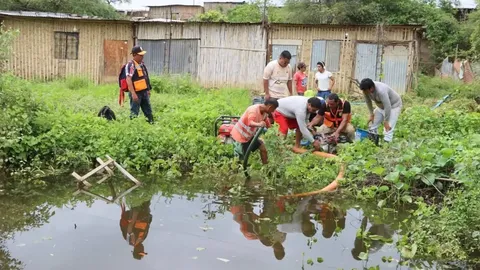
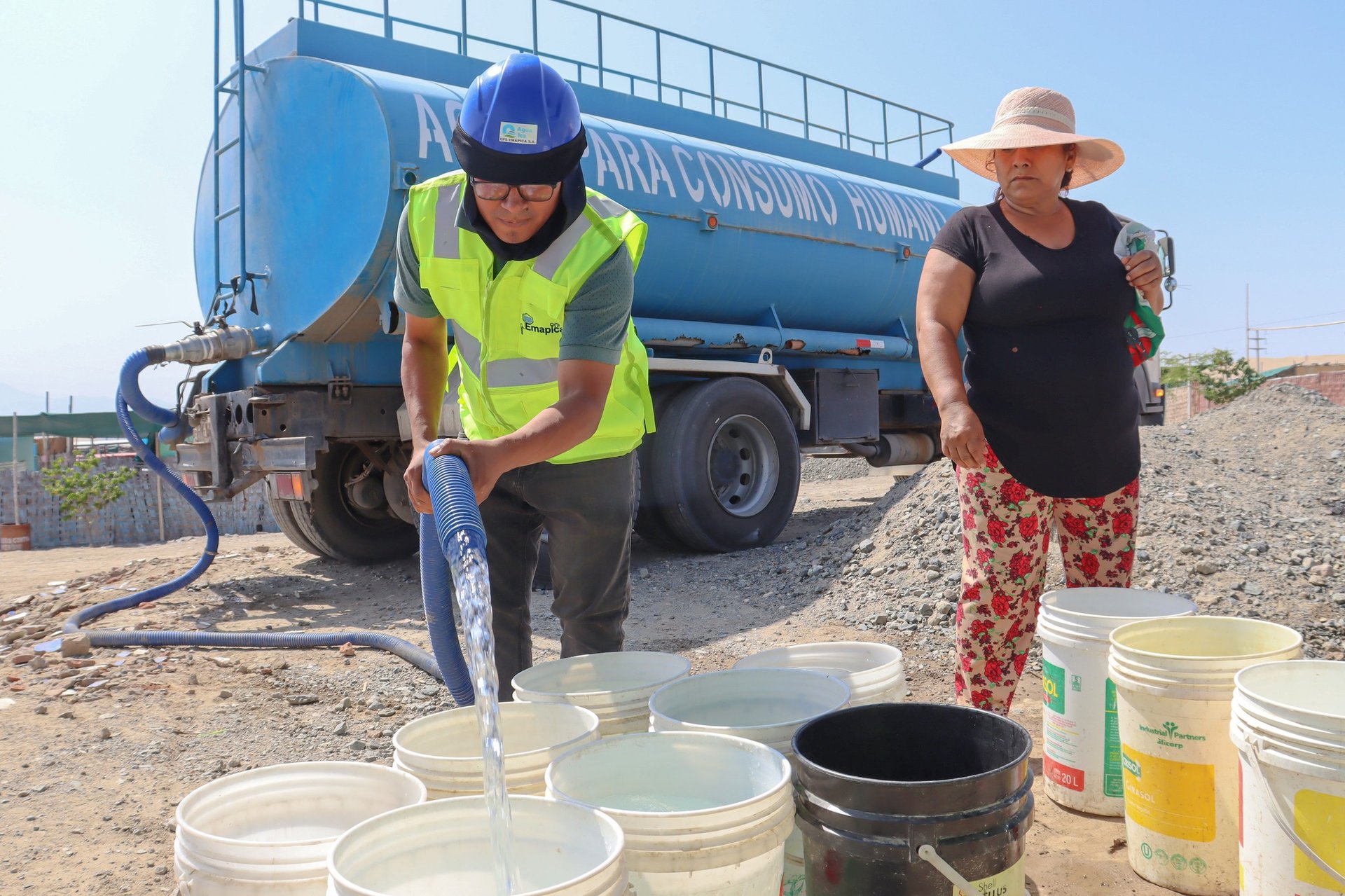
"We live without property title, without water, without electricity, without school or health post. Only a few houses have access to drinking water; the rest depend on water tank trucks. They bring the water dragging hoses along the ground and you don't even know what condition it's in."
Water from the truck is used for washing or cleaning, but not for cooking.
"Sometimes it gives us stomachaches, so I prefer to buy sealed bottles to make my food," says Vlasova. A 1,100-liter tank costs 25 soles and lasts about fifteen days; in large families, barely a week. "Per month it's about one hundred soles just for water," she calculates.
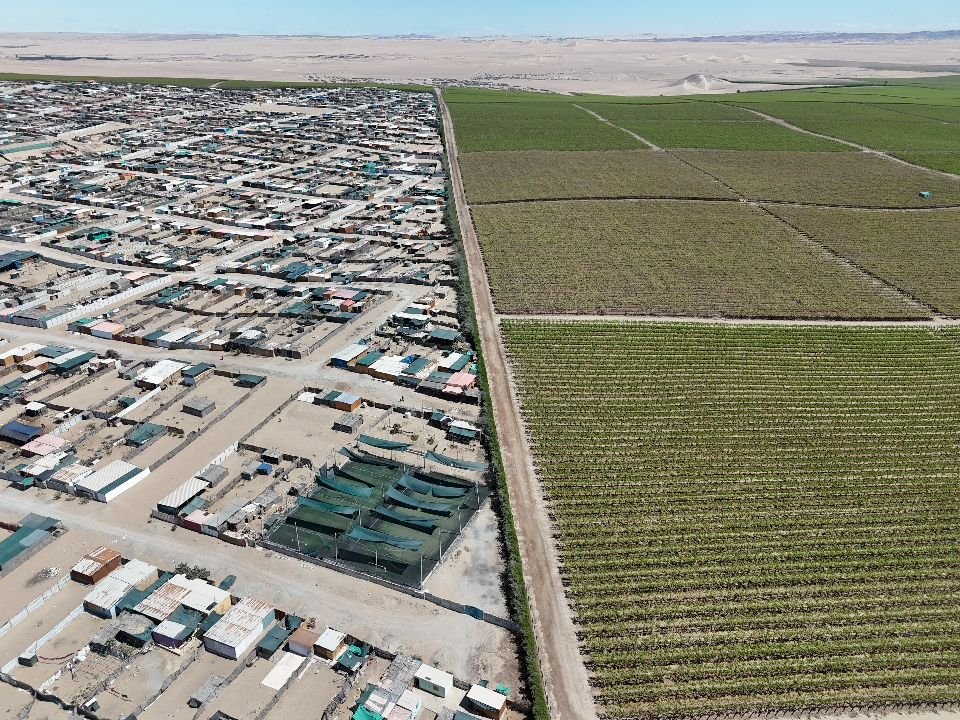
What Vlasova faces reflects the situation of more than 35,000 people who live on the margins of the valley, in areas that include Tierra Prometida, Barrio Chino and Santa Lucía. They have no drinking water and must buy it at almost triple the price paid by those who receive it through pipes, according to the study "How fair is our water footprint in Peru?", prepared by Water Witness International and the Peruvian Center for Social Studies (CEPES), with participation from the National Water Authority (ANA) and funding from the United Kingdom, one of the main destinations for Peruvian agro-exports.
The report took Ica as an emblematic case to show how the agro-export boom in one of the most arid areas of the country has transformed water use and accentuated inequalities in its access.
Behind that scarcity there is not only state neglect, but also an economic model that prioritized water for export crops. That thirst is the other face of the so-called agro-export miracle of Ica: a region that, in less than fifteen years, went from being a desert to being covered with fields of grapes, asparagus, blueberries and avocados that today fill the supermarkets of Europe, the United States and Asia, at the cost of increasingly overexploited aquifers.
The agricultural boom also transformed the city. Between 2010 and 2017, the district of Ica, the regional capital, went from 185,000 to 282,000 inhabitants: almost 100,000 more in just seven years, a growth close to 50%, according to INEI. Attracted by the promise of work on the estates, thousands of families migrated from the highlands and the jungle, building houses of straw mats and corrugated metal on the edges of the valley. But urban expansion was disorderly and water and sewage networks did not grow at the same pace.
In official records, the story seems different. According to the Ministry of Housing, Construction and Sanitation, 89.3% of the population of the Ica region has access to drinking water, a figure even higher than the national average. However, just turn on the tap and the statistics crumble: in many neighborhoods, water arrives barely a few hours a day. In 2023, only 13.3% of households had continuous 24-hour service, a drop from the 19.2% recorded in 2019.
In the city of Ica, urban drinking water service is provided by the Municipal Company of Drinking Water and Sewerage of Ica (Emapica S.A.), which also serves the districts of Parcona, Los Aquijes and part of the province of Palpa. Its supply comes almost entirely from the overexploited groundwater reserves of the Ica valley and the Villacurí and Lanchas plains.
Emapica operates 34 active tubular wells and a filtering gallery that captures seepage from the Ica River. From these sources, water is pumped to 25 elevated and underground reservoirs that feed an aging pipe network, with leaks and low pressure, especially in peripheral areas.
Outside the regional capital, the rest of the population depends on other sanitation service providers: Semapach S.A., which supplies the provinces of Chincha and Pisco, and Emapavigs S.A., which serves Nazca and Vista Alegre. All of them depend on the same type of sources: underground wells and filtering galleries.
Together, the region's urban systems extract millions of cubic meters of water from the underground each year, while aquifers lose their capacity to recharge with rainwater and wells show signs of depletion from continuous extraction.
Increasingly Salty Water
Constant pumping of groundwater for export fruit and vegetable crops has broken the natural balance of Ica's aquifers. For years, dozens of companies have extracted more water than the underground can recover, and that problem now affects the lives of thousands of families.
Aquifers—invisible reserves that feed wells and supply the city—have suffered a sustained decline in the water table. In many sectors, municipal wells and those of small farmers no longer capture water because the level is several meters below their pumps. Drilling a new one costs thousands of soles, an impossible investment for most.
The deeper you have to dig, the worse the water quality. Continuous extraction of water from the underground drags salts and minerals from ancient layers, while, in the coastal zone, the sea infiltrates underground. Thus, water that was once fresh and clean is now brackish: it leaves a whitish residue in pipes and, in many neighborhoods, has ceased to be safe to drink.
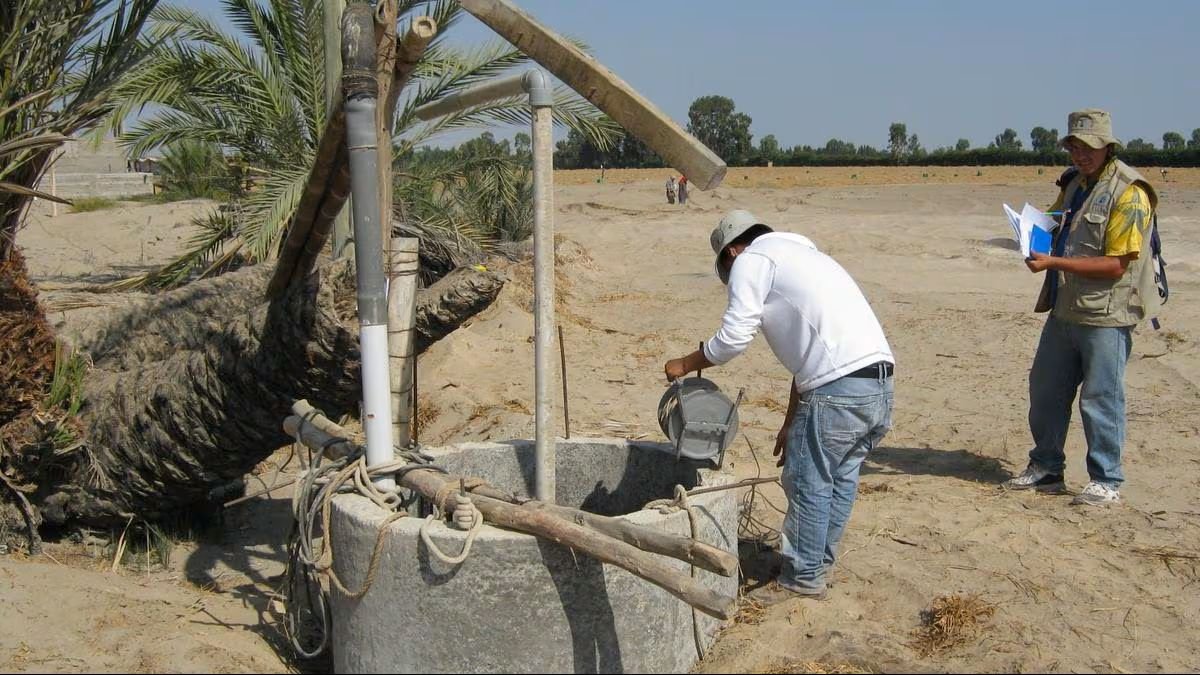
Historical reports from the National Water Authority confirm the trend: salt concentration in the Ica aquifer increases each year, at an average rate of 0.1 dS/m. It may seem like a minimal variation, but over time it has a devastating effect. A well that twenty years ago offered water suitable for irrigation today may yield almost unusable water.
The measurement in dS/m (deciSiemens per meter) indicates how much electricity water conducts: the saltier it is, the better it conducts current, but the worse it is for human or agricultural consumption.
According to the Management Plan for the Ica–Villacurí–Lanchas Aquifers, groundwater salinity has been increasing from the upper areas of the valley toward the coast. At the headwaters, the water is still fresh; but as the valley progresses, underground flow becomes slower and the sea begins to seep underground, leaving wells increasingly brackish.
In the upper part—San José de Los Molinos, San Juan Bautista, Subtanjalla, Parcona, Los Aquijes and La Tinguiña—wells register between 0.5 and 1.0 dS/m, low to moderate salinity levels. In the middle zone—Ica, Tate, Pachacútec, Pueblo Nuevo and part of Santiago—values rise to 1.5–2.0 dS/m. And in the southern extreme, especially in Ocucaje and the lower part of Santiago, they reach between 2 and 5 dS/m, too high for an aquifer that supplies homes and crops.
The World Health Organization (WHO) recommends that drinking water not exceed 1,000 mg/L of dissolved salts, equivalent to 1.5–2.0 dS/m. Under that parameter, wells in Ocucaje and southern Santiago widely exceed the limit: the water is brackish.
Drinking water with high salt content—especially sodium—for years can be associated with hypertension and a greater burden on the kidneys. This is indicated by PAHO/WHO and studies in coastal areas with brackish water, which have found links between drinking water salinity, elevated blood pressure and deterioration of kidney function.
Historical reports from the National Water Authority confirm the trend: salt concentration in the Ica aquifer increases each year, at an average rate of 0.1 dS/m. It may seem like a minimal variation, but over time it has a devastating effect. A well that twenty years ago offered water suitable for irrigation today may yield almost unusable water.
The measurement in dS/m (deciSiemens per meter) indicates how much electricity water conducts: the saltier it is, the better it conducts current, but the worse it is for human or agricultural consumption.
According to the Management Plan for the Ica–Villacurí–Lanchas Aquifers, groundwater salinity has been increasing from the upper areas of the valley toward the coast. At the headwaters, the water is still fresh; but as the valley progresses, underground flow becomes slower and the sea begins to seep underground, leaving wells increasingly brackish.
In the upper part—San José de Los Molinos, San Juan Bautista, Subtanjalla, Parcona, Los Aquijes and La Tinguiña—wells register between 0.5 and 1.0 dS/m, low to moderate salinity levels. In the middle zone—Ica, Tate, Pachacútec, Pueblo Nuevo and part of Santiago—values rise to 1.5–2.0 dS/m. And in the southern extreme, especially in Ocucaje and the lower part of Santiago, they reach between 2 and 5 dS/m, too high for an aquifer that supplies homes and crops.
The World Health Organization (WHO) recommends that drinking water not exceed 1,000 mg/L of dissolved salts, equivalent to 1.5–2.0 dS/m. Under that parameter, wells in Ocucaje and southern Santiago widely exceed the limit: the water is brackish.
Drinking water with high salt content—especially sodium—for years can be associated with hypertension and a greater burden on the kidneys. This is indicated by PAHO/WHO and studies in coastal areas with brackish water, which have found links between drinking water salinity, elevated blood pressure and deterioration of kidney function.
Coliforms in Water and Absence of Sanitary Control
Salt is not the only problem with water in Ica. In 2024, a report from the Comptroller's Office revealed that the water consumed in Ica is also not free from bacterial contamination. The Regional Health Directorate (DIRESA) acknowledged that most water supply systems operating in the province of Ica do so without sanitary authorization. There are about 90 systems, administered by 52 providers—among distribution companies, neighborhood councils, associations and municipalities—but none has the permit or registration required by law.
Of those 90 systems, DIRESA only monitored 70 between January and October 2024, and the results were alarming. In many cases, water contains fecal bacteria or lacks the necessary chlorine to eliminate microorganisms. According to the report itself, one in five systems presents risk from fecal coliforms, and almost half do not meet the minimum disinfection level. At several points in the valley, water that should be safe can cause illness if drunk without boiling.
The most affected districts are La Tinguiña, Los Aquijes, Salas, Santiago, Subtanjalla, San Juan Bautista and Pachacútec, where analyses show "high" and "very high" levels of bacterial and chemical contamination. Only in Ocucaje and Yauca del Rosario do results remain within permitted limits.
The Comptroller's Office warns that these deficiencies put the health of thousands of families at risk. The lack of constant monitoring, the absence of sanitary permits and the precariousness of distribution systems leave the population exposed to consuming contaminated water.
Living and Working with Thirst
In recent years, protests in Ica have a common thread: inequality in access to water and precarious working conditions. Thousands of workers blocked roads to demand basic rights, in a region where—according to IDEA International—the lack of essential services is one of the greatest sources of social conflict.
What does "precariousness" mean when the problem is water? That even with employment, basic conditions are lacking to preserve health at work: sufficient hydration points, clean and nearby bathrooms, and safe water throughout the workday.
Various investigations on the agro-export sector in Ica—including those by Swedwatch and RedGE—indicate progress in some large companies pressured by international standards, but also persistent gaps in others: temporary contracts, long workdays and lack of essential services within the fields.
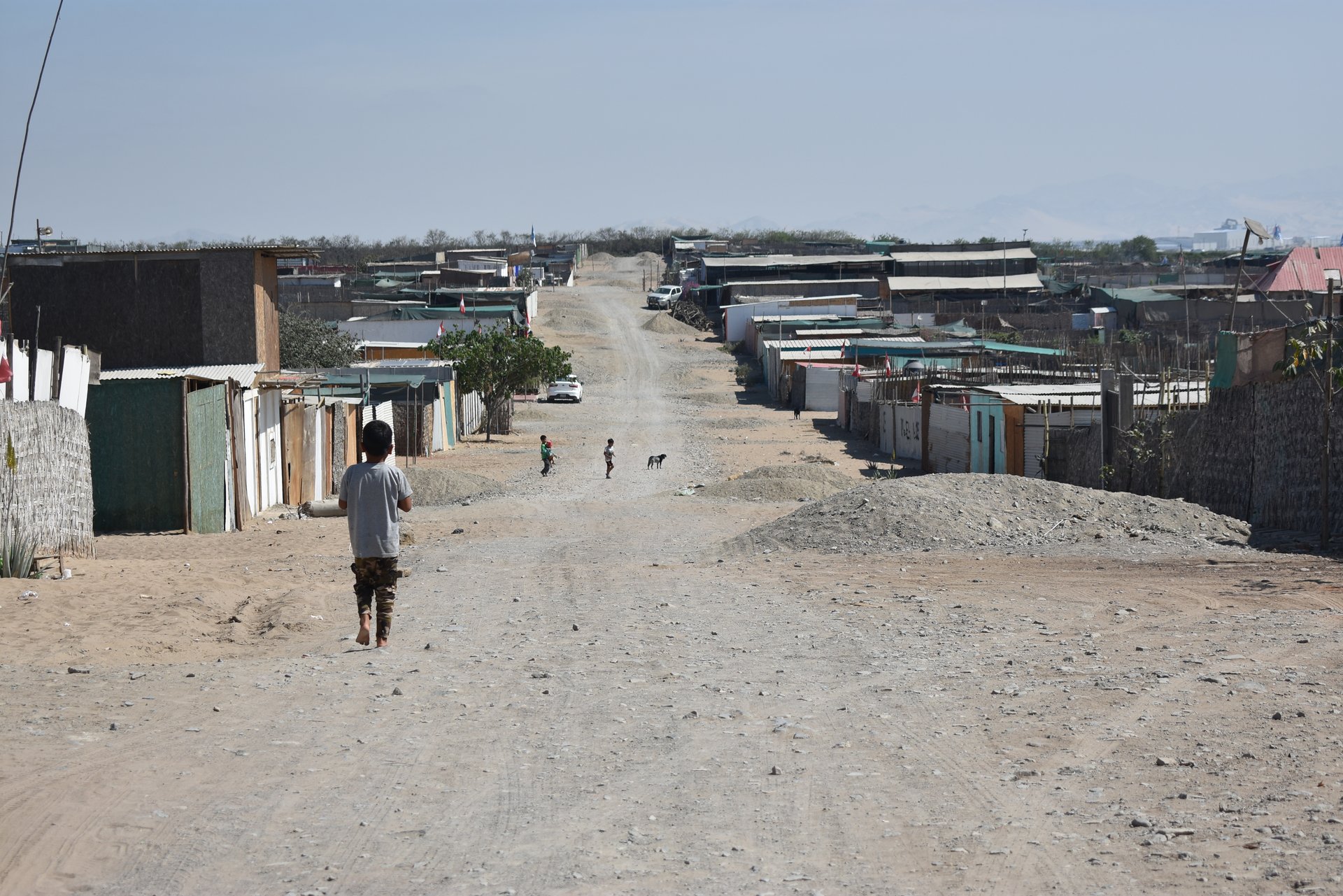
That labor deficiency transfers to the home. In peripheral neighborhoods, water management falls mainly on women: waiting for the tank truck, storing, rationing and boiling water, in addition to caring for the sick when water is not safe. It is invisible and unpaid work that sustains daily life in the valley.
While agro-export companies pump thousands of cubic meters of water per day to sustain their crops, many low-income families pay more for each liter and receive worse quality water. Growing international demand for fruits and vegetables increases pressure on aquifers and widens the gap between water used for export and water that reaches homes.
Solutions That Fall Short
For more than a decade, authorities have watched Ica's aquifers degrade and how this affects the population. The Regional Government, Provincial Municipality and municipal company Emapica have announced works, signed agreements and drilled new wells with the promise of improving access to drinking water. But the solutions, scattered and partial, barely manage to keep afloat a system that is sinking.
The Regional Government of Ica has been promoting since 2023 the construction of the Los Loros dam in Palpa, as part of the Río Grande project, with an investment exceeding 400 million soles. It is presented as a multi-purpose work, although its main objective is to ensure agricultural irrigation rather than urban supply. In parallel, studies have been prepared for a new drinking water treatment plant in San José de Los Molinos, in coordination with Emapica and the Municipality of Ica, but still without confirmed financing.
Meanwhile, the municipal company administers the service with aging infrastructure. In the last five years it has renovated water and sewage networks in districts such as Parcona and downtown Ica, with support from the Technical Agency for the Administration of Sanitation Services (OTASS). Each work, financed with about two million soles, seeks to replace collapsed pipes and reduce leaks. However, the impact has been limited: frequent cuts and low pressure remain part of daily routine in much of the city.
According to its own reports, Emapica has drilled new wells to replace those that dry up or become salinized. In districts such as Parcona and Palpa, elevated reservoirs are being built and capture points relocated to maintain system pressure. But digging deeper does not solve the problem: extracted water contains increasingly more salts and requires costly treatments that the company cannot assume with its current revenues.
In Ica's peripheral neighborhoods, works arrive late or do not arrive. Only in 2025 was a tripartite agreement signed between the Regional Government, Municipality of Ica and Emapica to design a comprehensive water and sewage project in Tierra Prometida, a sector where 45 human settlements depend on tank trucks to survive. This year, the municipality also approved another agreement to improve the Cachiche wastewater treatment plant and expand service in La Angostura and the West sector, urban areas that grew without planning and today discharge their sewage directly into the ground.
During climate emergencies, Emapica has deployed contingency plans: cleaning of collectors, reinforcement of defenses at the treatment plant and maintenance of wells to avoid service collapse. But extreme events—torrential rains or prolonged droughts—usually exceed any temporary measure.
Despite these efforts, the gap continues to grow. Infrastructure is insufficient, sources are overexploited and coordination between institutions dissolves in bureaucracy and the change of authorities. Public policy remains oriented toward increasing supply—more wells, more works—while demand continues to exceed the limits of a desert region.
In the words of an engineer who participated in aquifer studies: "We keep pumping more than the underground can give. It's like squeezing a dry sponge."
Reversing the damage will require more than new works. It involves prioritizing water access for the population, balancing agricultural use of the resource, sanctioning illegal extractions and allocating part of the agro-export sector's revenues to ensure that Ica families have safe and sufficient water in their homes.
For this report, Salud con lupa requested interviews with Emapica, the Provincial Municipality of Ica and the Regional Health Directorate (Diresa-Ica). Management with Emapica began on September 16 and, a month later, on October 16, the company confirmed it would not provide statements. That same day requests were sent to Diresa-Ica and the Provincial Municipality of Ica, but as of publication date no response was obtained.

Bertha Challenge Fellowship